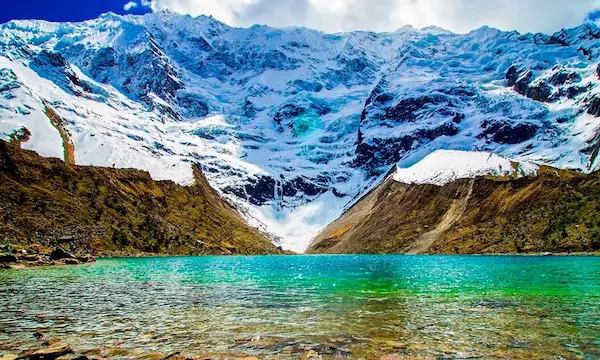
The Qhapaq Ñan formed the principal road network of the Inca Empire. This system extended approximately 40 000 kilometers across Andean territories that correspond to present-day Colombia, Ecuador, Peru, Bolivia, Chile, and Argentina. The Inca Trail to Machu Picchu constitutes one specific segment within this network. This section is distinguished by its engineering details, the number of archaeological sites it contains, and its association with ceremonial activities. Our local guides, who maintain extensive experience on the route, provide detailed explanations of these elements during the trek. All private transportation is supplied exclusively through the agency’s own vehicles.
Distinction Between the Qhapaq Ñan and the Inca Trail to Machu Picchu
The Qhapaq Ñan served as the royal road system for the administration of the empire’s territories. The Inca Trail to Machu Picchu refers to the particular route that connects the Cusco region to Machu Picchu. Several segments of the Qhapaq Ñan led to huacas and other significant locations, many of which supported ritual or symbolic functions.
Pachacútec Yupanqui and the Development of the Route
Pachacútec Yupanqui directed the main phase of expansion during his reign (approximately 1438–1471). The route to Machu Picchu formed part of this period of reorganization and was developed primarily for ceremonial purposes.
Construction relied on the mita system of rotating labor tribute and the participation of mitmaqkuna specialists. These groups included families relocated from different regions who possessed skills in stonemasonry, engineering, and adaptation to local conditions.
Archaeologist John Hyslop characterized the overall organization of the Inca road system as a “permanent military operation” in terms of planning and sustained effort.
Major construction and improvement activities occurred between approximately 1440 and 1530, extending across the reigns of Pachacútec Yupanqui and Túpac Yupanqui.
Three Principal Functions of the Inca Trail to Machu Picchu
The route fulfilled roles that differed from those of the broader Qhapaq Ñan.
- Spiritual function: It operated as a pilgrimage path used primarily by priests and members of the Inca elite. The journey connected to sites associated with the worship of the sun and the Apus.
- Political function: The construction in high-altitude and difficult terrain demonstrated the organizational capacity of the Inca state.
- Logistical function for the elite: The route supported the transport of goods, offerings, and resources required to maintain activities at Machu Picchu and related sites.
Archaeological Sites in the Order Encountered on the Route
The sites appear sequentially during the trek and illustrate aspects of Inca administration, ritual, and adaptation to the landscape.
- Llactapata (Town on the Heights): Positioned at the start of the main section; served as a control point and possible location for astronomical observation.
- Runkurakay (Stone Drum): Circular structure located on a slope; interpreted as a resting lodge with additional ceremonial elements.
- Sayaqmarca (Inaccessible Town): Constructed on a ridge; contained plazas, enclosures, and water channels that indicate administrative and religious functions.
- Phuyupatamarca (Town Above the Clouds): Featured stepped baths and water channels used for ritual purification.
- Wiñay Wayna (Forever Young): Included agricultural terraces, ceremonial structures, and residential areas; functioned as a production and resting center.
- Inti Punku (Sun Gate): Aligned with the June solstice; provided the initial view of Machu Picchu for arriving groups.
Abandonment After the Spanish Conquest and Subsequent Rediscovery
Following the events of the 1530s, the route lost its ceremonial and administrative roles. Local communities in the region maintained knowledge of Machu Picchu and sections of the trail.
Hiram Bingham reached Machu Picchu in 1911 with assistance from residents who were familiar with the area. Evidence indicates that certain sections may have been deliberately obscured during the period of contact to protect sites from external access.
Modern Recognition and Conservation Measures
The Historic Sanctuary of Machu Picchu was designated a UNESCO World Heritage site in 1983, including the trail section. Machu Picchu received recognition as one of the New Seven Wonders of the World in 2007.
Daily entry is limited to a maximum of 500 persons, which includes hikers, guides, cooks, and porters. In practice, the number of visitors is restricted to approximately 180–200 per day. Permits are issued exclusively through authorized agencies. The route remains closed throughout February for maintenance, safety, and environmental recovery.
Sources of Historical Information
Knowledge derives from archaeological findings, colonial chronicles, and ethnohistorical studies. Key contributors include researchers María Rostworowski and John Hyslop.
Chronicler Pedro Cieza de León recorded observations in 1553: “I believe since the history of man, there has been no other account of such grandeur as is to be seen on this road, which passes over deep valleys and lofty mountains, by snowy peaks, over waterfalls, through living rock, and along the edges of rivers with great currents.”
Frequently Asked Questions
- Why was the Inca Trail to Machu Picchu constructed? The route supported spiritual access, political demonstration, and specialized logistical needs related to the sanctuary of Machu Picchu.
- Who participated in its construction? Labor was organized through the mita system under the direction of Inca engineers and relocated specialists (mitmaqkuna).
- Where does the Inca Trail to Machu Picchu begin? The regulated section commonly used today starts at Piscacucho (Km 82) and requires four days to reach Machu Picchu.
The information presented is based on current interpretations of available evidence. During the trek, our local guides with extensive experience on the route supply detailed commentary on each site and its historical context.